German industrial landscape in transition — traditional factories alongside modern wind turbines and solar fields

Non-fiction · 2026

The German Way

Out of the innovation romance — into operations: your path to measurable progress by 2030.

The German Way is a book by Dr. Stephan Theis, Munich — an operational framework for professionals and leaders in the German Mittelstand who want to use digitalization and AI as measurable levers.

Precision gears merging with digital circuits — a symbol for combining German engineering and AI

About the book

There's no shortage of substance. Of digital operating discipline, there is.

Industrial expertise, process knowledge, engineering thinking, the Mittelstand, execution rigor — these are not weaknesses. What German companies often lack is not intelligence, but digital operating discipline: the ability to turn data into decisions, incidents into learning cycles, and pilots into standards.

This book isn't about the next transformation slide, but about what actually changes in operations. For professionals and leaders in the Mittelstand who want to use digitalization and AI as operational levers — pragmatic, measurable, with German strengths as the foundation.


„Speed with substance doesn't come from more pressure, but from a clear operating model."

From the book

What the book actually says

„A plant with three cleanly scaled improvements is digitally further along than a plant with seventeen pilots and zero rollouts."
„2030 won't be decided in strategy decks. 2030 will be decided in operational reality."
„If you want speed, first define the stop criteria."

The core themes

Six perspectives for German change

The Innovation Romance

When pilots don't scale and strategy decks replace operations — and what counts instead.

German strengths, rethought

Every virtue is only an advantage if you manage its shadow side. Engineering, process knowledge, the Mittelstand — as operational building blocks, not folklore.

AI as partner, not threat

From demo to operations: how AI delivers impact step by step in engineering, production and service — with guardrails instead of hope.

Out of the comfort zone

The biggest brakes don't come from outside. How to translate zero-defect thinking and committee logic into short learning cycles.

Leadership in transition

Which routines, roles and decision rights modern leadership needs — and why learning must be part of operations.

The way forward

The German Way Operating Model: three principles that let companies combine speed and quality — measurable, repeatable, scalable.

Who this book is for

For doers who drive change

Managing Directors & Board Members

You need an operating model for 2030 — not the next strategy deck. This book delivers the operational framework.

Division & Department Heads

You know the tension between day-to-day business and change. Here you'll find concrete decision rights and shorter learning loops.

Specialists & Experts

AI competence is becoming a professional foundation — not a bonus. This book shows how to combine domain expertise and digital tools.

Founders & Innovators

From idea to market: how to bridge the transfer gap between research and value creation.

From the book

The company self-check

Five operational dimensions — from throughput times to data usage to piloting — show you where your company stands and where you can start.

Action needed

Fundamental structures and competencies are missing. Act now, before the gap grows too large.

On the way

First steps are done, but consistency or speed is lacking. The potential is there.

Well positioned

Your company already actively uses its strengths and adapts continuously. Keep it up — and inspire others.

Coming 2026

Here's what you get in advance.

Join the waitlist and receive: early chapter excerpts to read, exclusive pre-order access with a launch discount, and notification of the release date.

Frequently asked questions

Questions about innovation and digitalization in Germany

How do Mittelstand companies successfully master digitalization?

Mid-sized companies master digitalization most successfully when they use their existing strengths — engineering expertise, quality focus and close customer relationships — as a foundation. Digital tools and AI applications then act as amplifiers of these strengths. The first step is often digitalizing existing processes before developing new business models.

Why does innovation so often stall in Germany?

In Germany, innovation is often celebrated, but the operational implementation step — the engine room — is avoided. The quality standard turns into an administrative reflex, excellence turns into preservation. The way out of this trap does not run through a radical cultural break, but through deliberately using existing strengths with new tools.

What role does AI play for leaders in German companies?

AI is not a replacement for professionals and leaders, but a lever that amplifies their competence. For leaders this means: use AI tools deliberately to ground decisions better, accelerate processes and relieve teams. The key is to understand AI as a partner — not as a threat.

What are the real strengths of the German economy in global competition?

Germany's real strengths lie in engineering, the depth of the Mittelstand, quality focus and the will to do things thoroughly. In global competition these are not handicaps — they are a foundation that can be reactivated through digitalization and AI.

How does leadership succeed in digital change?

Leadership in digital change means inspiring teams for change rather than administering them. Modern leaders create space for experiments, communicate direction instead of control and use digital tools to get closer to the customer and the market. Willingness to change starts at the leadership level.

How does the German way of digitalization differ from Silicon Valley approaches?

The German way does not rely on disruptive reinvention at any cost, but on pragmatically combining proven strengths with digital possibilities. Instead of destroying everything that works, engineering expertise and quality thinking are used as a base on which digital innovations build — sustainable and competitive.

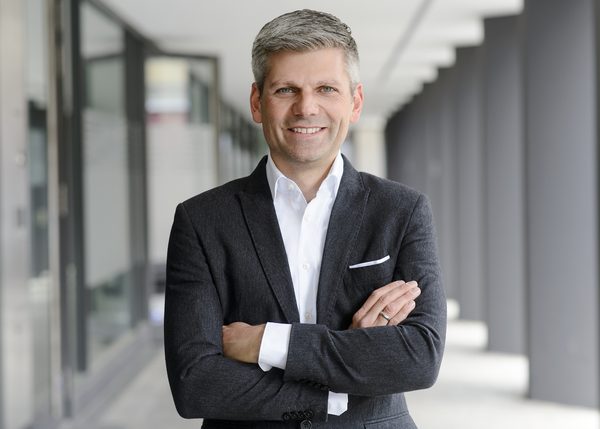
Stephan Theis, author of The German Way

The author

Stephan Theis

Dr. Stephan Theis is Managing Director at Slalom GmbH in Munich, a global management and technology consultancy. His more than 20 years both at BMW AG and as a founder and entrepreneur have given him far-reaching insight into German industry and its challenges in the digital age. He supports professionals and leaders in the German Mittelstand and DAX40 companies in using digitalization and AI as operational levers — without sacrificing their own strengths.

The German Way is his first book: an operational framework for companies that want to combine speed with substance — pragmatic, measurable, with German strengths as the foundation.
Connect on LinkedIn